
JUST ARRIVED     New gear to help you make the most of your adventures - SHOP NOW »

  FATHER'S DAY GIFTS     Discover gift ideas for Dad on Sunday 15th June - SHOP NOW »

 FREE FLY FORTNIGHT    Buy 5 flies, get the cheapest FREE. Ends 13th March - SHOP NOW »

  MID-SEASON SALE NOW ON     Up to 50% off selected clothing, tackle & accessories - SHOP NOW »

  WIN A YETI COOLER     Your chance to WIN one of two Tundra coolers - ENTER NOW »

  NEW FARLOWS COLLECTION     Discover our fieldwear & country clothing range - SHOP NOW »

  WET WEATHER WELLINGTONS     Dodge the puddles, keep those feet warm & dry - SHOP NOW »

  GIFT VOUCHERS     Our e-Vouchers are great if you're stuck for late gift ideas - SHOP VOUCHERS »

  BLACK FRIDAY 15% OFF     Grab 15% off orders £250 or more with code BLKF15 - Terms Apply »

  WINTER SALE NOW ON     Save between 30% and 50% OFF - SHOP NOW »

Farlows Expert Advice On Choosing Which Double-Handed Fly Fishing Rod Is Best

Which Double Handed Fly Fishing Rod?

Choosing a Double-Handed Fly Rod

Before getting technical, let’s first start by looking at why a double-handed fly rod is necessary or preferable over a single-handed rod in certain fishing situations. When we think of double-handed rods, the first thing that comes to mind is Atlantic salmon fishing, the traditional domain of these tools. Increasingly though, a preference for double-handers has crept into steelhead fishing and even trout fishing with the advent of ‘trout spey’ rods and lines.

Double-handers come into their own when you need to lift longer lengths of line off the water, control and mend the line at distance as it swings through a stream, fish with large heavy flies and sinking tips, or to achieve distance when there is no backcasting space behind you. If you’re fishing on a typical UK salmon river, you’ll have to deal with at least one, if not all, of these situations.

Most double-handed rod ranges include models from 12’ through to 15’, though shorter ‘switch’ rods and longer rods are available. Rod and line technology has moved forward at a rapid rate in recent years and presently the trend is towards shorter lighter rods than would have been considered the ‘go-to’ in the past. A key reason for this is the huge improvements that have been made in fly line technology, with the advent of ‘short head’, ‘Scandi’ and ‘Skagit’ lines which load rods more quickly and require less physical effort to cast.
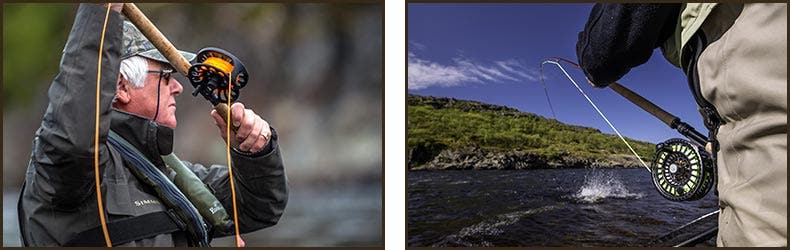
Which Double Handed Fly Rod Should I Choose

Which rod length should I choose?

Not so long ago, a 15’ rod was the default for most salmon rods sold in the UK. Today an increasingly high proportion of sales are taken by 13’ - 14’ models, as anglers realise that the longer rod will not provide any benefit in most (but not all!) situations.

The table below will give you a general idea of rod lengths and their applications:

Large rivers such as the Tay or Tweed at any time of year.
Medium-sized rivers, e.g Spey/Dee in high water conditions.

15’

Typical summer conditions on medium-sized rivers such as the Wye/Spey/Dee.
Sea trout fishing on rivers such as the Rio Grande in Argentina. Russian Atlantic salmon rivers.
Steelhead fishing.

13’ - 14’

Small to medium rivers e.g Taw/Helmsdale/Thurso.
Low water conditions on larger rivers.
Grilse fishing.

12’ - 13’

Sea trout fishing, salmon fishing in small spate rivers, streamer fishing for trout.

11’ - 12’

Which rod action is right for me?

Shooting-head lines have become very popular with salmon fly fishers in recent times and fishing in the ‘Scandi’ style as many of us now do, works best with a more tip actioned double-handed rod.

If you fish using a more traditional style of casting with a longer belly ‘Spey’ line, you may get on better with a more ‘through-actioned’ rod that loads deeper into the blank as you make your cast.

The same is true if you use Skagit lines that are cast using sustained anchor casts like snap and circle ‘T’s.

Having said that, the boundaries between these two types of rod are becoming increasingly blurred and the ‘feel’ of a rod is very much down to personal preference.
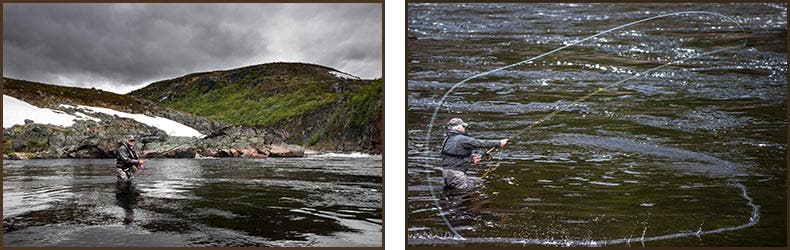
Which rod action is right for me?

Where should I start?

Decide where you’re most likely to be using your rod and at which time of year. This will help you understand which lines and flies you’ll be using. From there you can begin to narrow the selection down by taking rod action into consideration.

If you need expert advice – that’s what we’re here for! Call our team or visit us in-store and we’ll help kit you out with the best tool for the job whether you’re fishing hear at home or abroad.

For more help and information on purchasing your new double-handed rod please contact Farlows on +44 (0) 207 484 1000

Salmon and double-handed fly rod pictured in the river greenerySalmon and double-handed fly rod pictured in the river greenery

Choosing a Double-Handed Fly Rod

Firstly let’s start by looking at why a double-handed fly rod is necessary or preferable over a single-handed rod in certain fishing situations. When we think of double-handed rods, the first thing that comes to mind is Atlantic salmon fishing, the traditional domain of these tools. Increasingly though, a preference for double-handers has crept into steelhead fishing and even trout fishing with the advent of ‘trout Spey’ rods and fly lines.

WHY YOU MIGHT NEED A DOUBLE-HANDED FLY ROD

  • Better ability to lift longer lengths of line off the water
  • Greater line control and mending the line at distance
  • Fishing with large heavy flies and sinking tips
  • Achieving distance when there is no back-casting space behind you

If you’re fishing on a typical UK salmon river, you’ll have to deal with at least one, if not all, of the above situations, making a double-handed rod perform much better than a single-handed one.

Most double-handed rod ranges include models from 12’ through to 15’, though shorter ‘switch’ rods and longer rods are available. Rod and line technology has moved forward at a rapid rate in recent years and presently the trend is towards shorter lighter rods than would have been considered the ‘go-to’ in the past. A key reason for this is the huge improvements that have been made in fly line technology, with the advent of ‘short head’, ‘Scandi’ and ‘Skagit’ lines which load rods more quickly and require less physical effort to cast.

Farlows content creator sat with double-handed fly rod preparing to fishFarlows content creator sat with double-handed fly rod preparing to fish

And here are the answers from the Farlows team of experts, which we hope will make the process of selecting a double-handed fly rod a bit easier for you. Check out our single-handed fly rod guide if you’re after something for other species.


WHAT TYPE OF DOUBLE-HANDED FLY ROD DO I NEED?

Modern technological developments in both fly rods and lines have led to three distinct styles of double-handed casting evolving, so you’ll need to consider the type of rivers you’ll be fishing and your style of casting:

  • Traditional Spey casting – this has more in common with casting traditional double taper fly lines where a full length fly line is used. Today a purpose designed Spey casting line is best matched with a through-action rod that loads deep into the blank. This is an elegant style of casting at its best with floating and intermediate sinking lines. Full length fly lines with long fast sinking belly sections are more challenging to cast in this style.
  • Scandinavian / Shooting Head – increasingly popular, this style has a lot going for it. A short shooting head fly line (10-14m) is attached to a thin running line and allows efficient casts to be made with a more tip-action orientated rod and a punchy casting style focused on low effort power strokes driven by the bottom hand. This is an easy way to fish sunk lines as the short lengths of line on the water at the point of recasting are easily controlled. A shooting head system is usually modular, enabling quick and easy swapping of the shooting head attached to the running line for one with a different sinking density, length, or size.
  • Skagit Casting – again another new style, this time from the Skagit river in BC, Canada, using a shooting head line with a short thick front  section to cast fast sinking tips and large flies. A new suite of casts have been developed to go with these lines including the Perry Poke, Circle ‘C’ and Snap ‘T’. These are termed ‘sustained anchor casts’ and have the advantage of being less timing critical than other Spey casts. Although this style lacks some elegance and delicacy it more than makes up for this by its ability to overcome difficult bankside conditions and awkward winds. Rods need to have a softer tip and load deeply to maximise the efficiency of this style.

You may also want to consider a switch rod, which is a slightly shorter (11-12ft), lighter (up to #9 AFTM) type of double-handed rod allowing both overhead and anchor casts. This makes them very versatile for a variety of fishing conditions.

Switch rods are ideal for small to medium sized rivers where you’re casting small to medium sized flies, but not great if you’re after distance, using heavy flies, long leaders or sink tips, facing strong winds or if fighting powerful fish.


WHAT LENGTH SHOULD MY DOUBLE-HANDED FLY ROD BE?

Similar to above, this depends on the type of fishing you’ll be doing (the type of water and your chosen casting style). Most double-handed rods vary from 11ft to 15ft, with the longer rods generally having a higher line weighting.

If you’re fishing smaller rivers or lower water, then shorter rods (11-13ft) are best given they offer more delicate presentation and are less physically demanding over the course of a day’s fishing. Also good for sea trout fishing or if using streamers for big trout.

For medium rivers 13-14ft rods are ideal and probably the most versatile as they’re capable of handing most situations thanks to their balance of casting distance and control. Also good for the bigger sea trout you might encounter in  Argentina.

The longest rods (14ft+) perform best when faced with the largest rivers and biggest fish, the extra length helps lift longer lengths of line off the water and provides better mending ability and casting distance.

The table below will give you a general idea of rod lengths and their applications - also check out our comprehensive guide on how to fish for salmon:

Large rivers such as the Tay or Tweed at any time of year.
Medium-sized rivers, e.g Spey/Dee in high water conditions.

15’

Typical summer conditions on medium-sized rivers such as the Wye/Spey/Dee.
Sea trout fishing on rivers such as the Rio Grande in Argentina. Russian Atlantic salmon rivers.
Steelhead fishing.

13’ - 14’

Small to medium rivers e.g Taw/Helmsdale/Thurso.
Low water conditions on larger rivers.
Grilse fishing.

12’ - 13’

Sea trout fishing, salmon fishing in small spate rivers, streamer fishing for trout.

11’ - 12’

WHAT WEIGHT DOUBLE-HANDED FLY ROD (#AFTM) ROD DO I NEED?

Whatever their length, all fly rods also come with a weighting system which is known as the AFTM rating (Association of Fishing Tackle Manufacturers). This specifies the recommended fly line weight to be used with that particular rod, ensuring the rod performs at its best and loads correctly when casting.

The AFTM number is usually displayed by a “#” followed by a number from 0 to 14 and it corresponds to the weight in grains of the first 30 feet of a fly line. The lower AFTM rating numbers cover lighter fly lines for smaller fish and delicate presentation, while larger ones cover heavier lines more suited to larger fish and heavier flies.

The AFTM scale for double-handed rods differs from the AFTM scale for single-handed rods. There are three size differences between the two scales. For example, double-handed AFTM#7 is equivalent to a single-handed AFTM#10. Below are the ratings for double-handed rods:

  • AFTM #7/8: suitable for smaller rivers and smaller salmon in low to mid water conditions
  • AFTM #8/9: a popular all round rating covering a variety of condition on medium sized rivers
  • AFTM #9/10: for the larger fish in higher water conditions that demand bigger flies
  • AFTM #10/11: for biggest fish in the largest rivers or rivers with powerful flows

The fairly recent development of multiple double-handed fly lines means there are large differences between Spey, Skagit and shooting heads, so the older AFTM rating system isn’t always precise. Most modern double-handed rod manufacturers now also list on the rod a "grain window" or a specific recommended head weight in grains (e.g. 520–580 grains). It’s probably a more reliable method for matching double-handed lines to double-handed rods as it accounts for the entire weight of the casting head, not just the first 30 feet.


WHAT IS ROD ACTION AND WHAT DOUBLE-HANDED ROD ACTION IS BEST FOR ME?

Fly rod action describes two attributes of a fly rod that usually go together. Firstly, the speed that the rod straightens after being flexed (also known as recovery) is described as fast, medium or slow. Secondly, the way the rod bends when it is flexed - a rod can be tip action, middle-tip, middle or through action. A fast action rod will normally bend most at the tip and less so through the rest of the blank, so tip and fast action go together as do through (bending throughout the rod) and slow action.

The ideal double-handed fly rod action depends on your casting style, skill level, and fishing conditions. There is no single "best" action; instead, select the one that matches your needs and preferred technique.

Shooting-head lines have become very popular with salmon fly fishers in recent times and fishing in the ‘Scandi’ style as many of us now do, works best with a more tip actioned double-handed rod.

If you fish using a more traditional style of casting with a longer belly ‘Spey’ line, you may get on better with a more ‘through-actioned’ rod that loads deeper into the blank as you make your cast.

The same is true if you use Skagit lines that are cast using sustained anchor casts like snap and circle ‘T’s.

Having said that, the boundaries between these two types of rod are becoming increasingly blurred and the ‘feel’ of a rod is very much down to personal preference.


WHAT SHOULD I LOOK FOR WHEN CHOOSING A DOUBLE-HANDED FLY ROD?

The most important thing is to match your rod (length, action, AFTM) to the type of fishing that you’ll be doing (size and condition of river, style of casting, target species). Once you’ve narrowed down the sort of rod best suited to your fishing, then look at what options there are in your budget range.

You should consider the materials and construction process involved in the rod blank, and also the quality of the fixtures (grade of cork used in the rod handle, reel seat, rod rings / guides).

Most fly rods these days are reasonable quality, but the cheapest ones are so for a reason. Choose the best you can afford (but remember an expensive fly rod won’t necessarily make you a better angler). The better rods also tend to have the better warranties, with longer and more comprehensive guarantees, reflective of their superior performance, materials and craftmanship.

If you can, look to try out your rod first before buying it.


WHAT DOUBLE-HANDED FLY RODS ARE EASIEST TO CAST?

Some double-handers will be easier to cast than others depending on the casting style, rod action, rod length and type of fly line used. However, thanks to modern rod and line technology developments it’s now much easier to cast longer distances with less physical effort.

There are several factors affecting ease of casting:

Firstly, rod action - through action rods are easier for beginners to load and best for Spey casting styles using full length lines. Faster tip action rods generate higher line speeds and therefore allow more distance when casting but require better timing and experience.

Secondly, rod weight (AFTM line # rating) - heavier weighted rods make it easier to cast larger, heavy flies, whereas lighter weighted rods require less power to cast.

Finally, rod length - shorter rods are easier to cast in overgrown areas and are less physically demanding over the course of a day, whereas longer rods can cast further and offer better line control.


WHAT DOUBLE-HANDED FLY RODS ARE BEST FOR BEGINNERS?

This very much depends on where and how you’ll be fishing.

If you plan on using Spey lines then a 12-14ft rod with a #8/9 weight rating and a medium action and more through action is a good starting point for a beginner, as the length and weight provide a decent balance of castability and versatility for various river sizes and conditions, plus it is more forgiving and easier to learn with.

If you intend to use Scandi lines then while the rod length and weight rating remain the same as above, rods with a fast action and tip action are much better, while Skagit lines need a rod with a softer tip and that loads deeply to maximise the efficiency of this style.

Switch rods can be used for both anchor casts and overhead casts and so can prove quite versatile, but only if fishing small to medium-sized rivers or where you are casting small to medium-sized flies.

Don’t start off with the really expensive rods, but do go for the best quality your budget can stretch too. You can build your rod collection over time as your type of fishing expands and you can upgrade as your experience and skill develop.


WHAT SIZE FLIES CAN A DOUBLE-HANDED FLY ROD CAST?

Double-handed fly rods are designed to cast bigger, heavier flies than those you might use with a single-handed rod.

However the shorter, less powerful double-handers won’t be as good as the longer, stronger ones when it comes to the biggest fishing flies used for salmon and steelhead, as those flies generally require the heavier lines to cast them and therefore the rod to match.

A group of salmon anglers relaxing with their double handed fly rodsA group of salmon anglers relaxing with their double handed fly rods

WHAT MAKES A GOOD DOUBLE-HANDED FLY ROD?

A good fly rod is not only one that’s suitable for the type of fishing you’ll be doing (think rod length, AFTM rating, rod action), it’s also one that feels right for you and your own style of casting.

With this in mind it’s always best to try before you buy if you can. Sometimes this won’t be possible though, so read the reviews, talk to fellow anglers, wriggle it around in the shop and ask the staff, and go for the best quality you can afford. More expensive rods won’t catch you more fish, but cost is usually a good indication of the quality of the materials involved, the research and technology gone into producing it, and ultimately its performance.

The best rods often come with comprehensive warranties, useful if you’re making a bigger investment. That said most rods these days are pretty decent (although the cheapest ones are so for a reason).

It’s a bit like buying a car - what you choose will depend on what you want to use it for and where, how often, how long for, and how much you can afford.


WHAT TYPE OF MATERIAL SHOULD A DOUBLE-HANDED FLY ROD BE MADE OF?

Most modern double-handed fly rods are made from carbon fibre due to its very high strength to weight ratio, making them lighter and easy to cast but also allowing them to be powerful without being cumbersome. The way that the carbon fibre is constructed can vary hugely in rod blanks, with more expensive, complex technologies often leading to performance gains.

Cork is still the most popular material for fly rod handles as it’s both light and durable, although it does vary in quality so always try to go for one with a high grading.

Reel seats are made from metal for durability (usually aluminium or sometimes titanium), although cheaper rods may use plastic (which isn’t as hard wearing), and more expensive ones may incorporate stunning wooden inserts for aesthetic pleasure not performance.

Rod rings are mostly stainless steel or titanium, with more expensive ones ceramic lined to reduce line friction when casting.


HOW DO I LOOK AFTER A FLY ROD?

A fly rod is essentially a tool for casting and playing fish, and all tools need maintenance for optimum performance and longevity. You should keep your rod clean, especially the guides and reel seat where dirt can accumulate and cause corrosion or friction when casting (a soft cloth or old toothbrush and mild soapy water works best).

Make sure your rod is completely dry when packing it into its rod bag to prevent mould. Check that the ferrules (the joints where the rod sections connect) are clean and dry. If you’re saltwater fishing then clean with freshwater after every use as salt is very corrosive.

And of course be sensible handing your rod - avoid extreme strains and bends (pull on the line not the rod if you get snagged), don’t knock it against hard surfaces, be careful with car doors and windows (magnetic rod racks for cars are brilliant) and try not to place it on the ground. When transporting your rod after use, always put it in the rod tube to protect it. After use, ensure it’s stored properly, away from direct sunlight in a cool, dry place.


DO FLY RODS COME WITH WARRANTIES?

Yes, most new fly rods sold in the UK come with a warranty, but its length and terms vary hugely depending on the manufacturer, and not all of them are free of charge. Sage, Hardy, Greys, Orvis, Snowbee all have extended even lifetime warranties (others from one to five years), some cover any breakage others only defective parts. 

Most brands offer replacement sections if you break them, in return for a fee (which again can vary). 

Most warranties are for the original owner only and require the rod to be registered with them shortly after buying it (proof of purchase required). 


WHAT AFTER SALES SUPPORT DO YOU GIVE ON FLY RODS?

We will of course advise you regarding the warranty for your particular rod when you purchase it.

Additionally we do offer 3rd party repair services with a trusted longstanding partner for rods beyond warranty or for smaller things that may not be covered by it, such as replacing rod guides, revarnishing whippings, cork handle refurbishment, fixing reel seats.


WHAT’S THE DIFFERENCE BETWEEN MORE EXPENSIVE FLY RODS AND CHEAPER ONES?

Thanks to advances in technology, most modern double-handed fly rods can adequately cast a fly these days, in the same way that most cars can get you from A to B. An expensive fly rod won’t necessarily make you a better angler, that is down to your own technique, but it can help.

The more advanced research, thorough testing and complex technologies employed by some manufacturers creates rods with better strength to weight ratios, more refined actions, and greater sensitivity, which all combined allow for improved rod action, casting, line control, presentation and accuracy.

Provided you have mastered the skills to use a fly rod properly and your preferred casting style, all the elements found in expensive fly rods present marginal performance gains which should enhance your overall fishing experience (and sometimes their greater aesthetic beauty also adds to your enjoyment).

For beginners who might not appreciate these marginal gains or have the skillset to master them, it’s probably best starting off with a less expensive fly rod. It’s also worth remembering that your fly line is an extension of your rod, so if you’re investing in an expensive rod there’s no point matching it with a cheap fly line.

Another key difference is that expensive fly rods are usually built with better quality fittings (rod guides, reel seats, cork handles) which will last longer than most of those used in cheaper rods.

Finally, expensive fly rods will generally come with a more comprehensive and much longer warranty (even lifetime) than cheaper ones (some of them don’t offer any warranties at all).

This guide to double-handed fly rods should cover all the key topics however, if you’re after a single-handed rod, then ensure you checkout the guide specifically for single-handed fly rods.

We hope this article will help those that are less familiar with the options, and the reasoning behind them, to refine their decisions. When investing in a new fly rod it’s so important that you select what’s right for the type of fishing you’ll be doing, but with so many options covering so many different scenarios it can be quite daunting to know what’s best.

The Farlows team is here to help, so please don’t hesitate to get in touch by calling us on +44 (0)207 484 1000, emailing us or popping into the store if you have any specific questions. We love nothing more than talking about fly rods and fishing with our customers.

Tight lines.

Discover The Latest Double-Handed Fly Fishing Rods