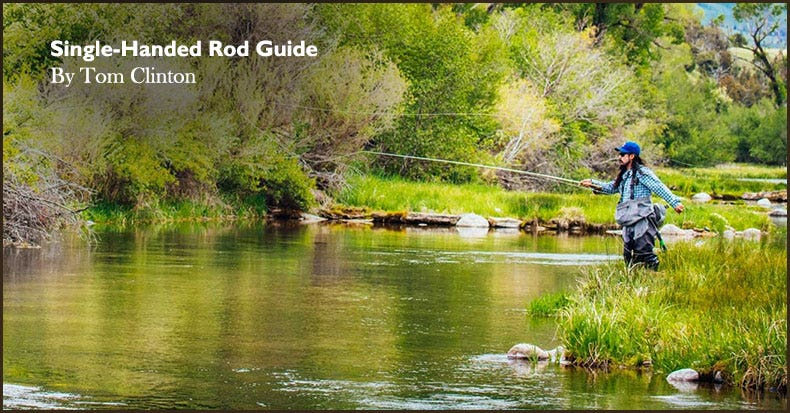

FARLOWS EXPERT ADVICE ON CHOOSING WHICH SINGLE-HANDED FLY FISHING ROD IS BEST

Choosing A Freshwater Single-Handed Fly Rod
Before we dive into the nitty-gritty of single-handed fly rod selection for freshwater applications, let’s first discuss their fundamental functions.
Ultimately, a fly rod should be capable of doing three things:
Casting and presentation
A fly rod will allow the user to cast their fly line and terminal tackle with differing levels of power and accuracy. Through experience, the right rod in the right hands will allow for delicate presentation of light tippets and tiny flies at one end of the scale and distance presentation of heavier flies or multi-fly rigs at the other.
Line Management
Once the cast has been made, certain situations will call for various forms of line management. As a general rule, a longer fly rod will allow for more line control, allowing the angler to work their fly to suit the situation.
Striking and playing a fish
Once the fly is in the right place, and a fish has taken it, the rod is essential to set the hook and to play and land the fish. It therefore needs to be strong and flexible enough to bend without snapping.
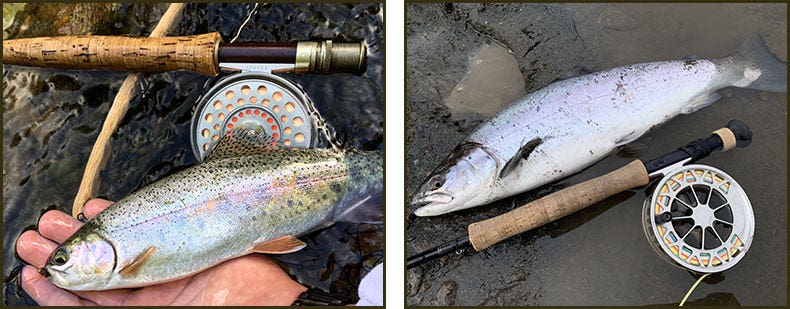
Freshwater Single-Handed Fly Rod Selection Process
Now that we’ve established the general purposes of a fly rod, let’s get stuck into the selection process. We have aimed to keep this guide as simple as possible so that it doesn’t become too daunting for a total beginner. The vast world of fly rods can be an overwhelming place so, to help reduce confusion, we will cover the following aspects:
- The first step - what do you want to catch and where?
- Fly rod actions - what on earth does that mean?
- Rod lengths - benefits and downsides.
- Other considerations.
Let’s get started…
What Do You Want to Catch and Where?
It is time to be honest with yourself, really think about where you plan to fish with your new rod and what you’re likely to catch when you get to the bank, or into the boat. It can be infuriating and disheartening if you get to a new spot and realise that the rod you’ve got with you is inappropriate.
Think of it like a set of golf clubs; you don’t have one club to cover all the shots you’ll take on a course, so you can’t expect one fly rod to cover everything from large reservoirs to small brooks.
Of course there are some particularly versatile fly rods on the market, but this is where knowing your intended venue and target species really helps.
Fly Rod Action
The action of a fly rod is a term bandied about like mad and used by marketing teams to sell rods and it is often mistaken or misunderstood by consumers, guides and even some experts! In reality it is a very simple concept, the action of a fly rod refers to how quickly it reverts to straight having been flexed. Hence the main three actions are fast, medium and slow and this is why you often see customers and sales advisors doing the ‘fly shop wiggle’ when checking out new rods.
As a general rule, the faster the action of a rod, the more experience it requires to get the most out of it. That isn’t to say a complete beginner won’t be able to cast a fast-action rod, but it will be harder to manage at first.
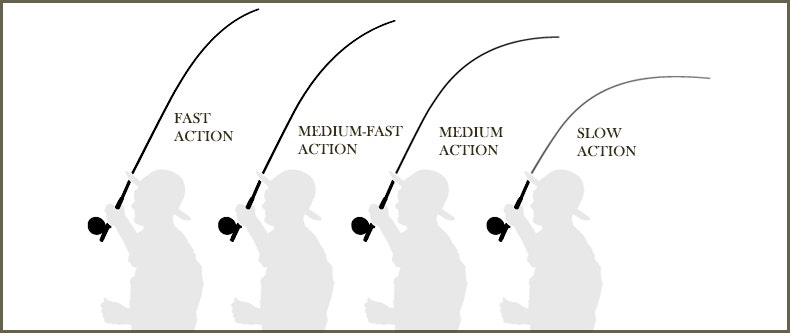
So, which action suits you best?
Fast
Pros: They are great for casting increased distances and brilliant for cutting through wind on those blustery days. It could also be argued that a fast action fly rod is less physically demanding due to its inherent power. You have to put less effort in to reach the same distance as you would with a slower action rod.
Cons: They are more difficult for beginners to handle as the cast’s timings have to be much more precise and they aren’t ideal for close range fishing where accuracy and delicacy are paramount. A faster rod will often accelerate a cast down into the water, easily spooking a fish that might otherwise have taken the fly.
Medium
Pros: These are fantastic all-rounders. Great for beginners who want to get to grips with fly casting and enjoy themselves while doing so. They’ll cast a wide range of flies and lines while still maintaining feel. If you plan on only owning one or two fly rods then a versatile rod with a medium action would be a sensible choice.
Cons: In situations that require the utmost distance, or the utmost delicacy, they can fall by the wayside. Think of a medium-action fly rod as a jack-of-all-trades.
Slow
Pros: Slow action rods are easier to cast accurately and delicately in close-quarter situations. Like a medium action fly rod, a slow action rod is great for a beginner as they are easy to cast (but it is worth noting they lack the versatility of the medium action). If you plan to fish smaller brooks, creeks or streams then you may benefit from a rod with a slower action rod too, as fighting small fish on softer rods is a lot more fun.
Cons: It’s very difficult to achieve increased casting distance with a slow-action rod. They also struggle to cast heavier flies or teams of flies, as the rod cannot generate the line speed to carry a heavier cargo.
NB: Action and flex are often confused in the world of fly rods. Where the action refers to the speed with which the rod returns to straight, flex refers to how far down the blank the rod flexes from the tip when casting. To add to the confusion, one tends to find specific types of flex combined with certain actions. For example, it is fair to say that most fast action rods have a tip-flex, most medium action rods have a mid-flex and most slow-action rods have a through-flex (i.e. the rod will bend significantly further down the blank than others). That is a general overview though - it is possible to find a fast-action rod with a mid-flex, as well as many other combinations.
Fly Rod Lengths
There are many different lengths of single-handed fly rod available on the market today. To keep things simple, I’ll narrow them down into rough categories in the table below, but do note there are some niche rods out there which will inevitably fall outside of these guidelines.
|
Location |
Rod length range |
Line rating |
|
Large Reservoir/Stillwater |
9’6” and 11’ |
#6 - #8 |
|
Small Reservoir/Stillwater |
8’6” - 9’6’ |
#4 - #7 |
|
Large River |
9’ - 10’ |
#3 - #7 |
|
Small River |
8’ - 9’ |
#3 - #6 |
|
Brook/Stream |
6’ - 8’ |
#0 - #4 |
As a rule of thumb the longer the rod, the further one can cast and the more control one will have over the fly line once it’s in/on the water. Those who fish larger stillwaters generally prefer a 10’ rod so that they can cast teams of flies further, and with less likelihood of getting into tangles. Shorter rods will afford the user a greater degree of accuracy at close quarters , while allowing them to navigate undergrowth and various bankside obstructions more effectively.
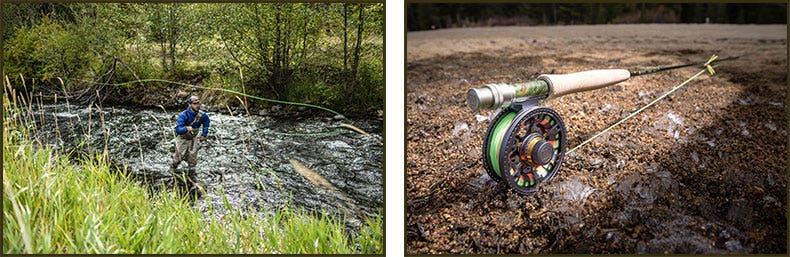
Other Considerations
Blank materials
While rods are still produced in traditional ways using older materials such as fibreglass and bamboo (split cane), the most common material on the market today is carbon fibre/graphite.
Bamboo and glass rods offer the user quite a bit more feel and presentation for light dry fly fishing but they aren’t nearly as versatile as a carbon rod due to their inherently slower actions. Carbon rods are quite a bit lighter than both of the alternatives and generally offer a much faster action, making them more suitable for casting further, with varying sizes of flies and reducing fatigue over a long day. If you’re a beginner and want to invest in a rod to cover multiple scenarios, then carbon is the way to go.
Handle styles
There are three main styles of cork handle available on the market today, each of which is suited to a different style of rod. There are varying grades of cork from which the handle can be made as well (ranging from cheap-and-cheerful composite, to top-of-the-line ‘Flor grade’). It is worth noting that some companies are now producing handles from EVA foam and carbon fibre, though these are rarely found on freshwater fly rods (unless in the pike/predator market). The three styles of handle are as follows:
Cigar: Found on the shortest, lightest freshwater rods and often on those made from bamboo. These usually have a sliding band reel seat that uses the friction of the reel’s foot and the cork to hold the fly reel in place.
Half wells: Found on rods up to 10’ long, but rarely on rods with a line rating higher than #6. These are usually accompanied by a screw-locking reel seat and therefore bridge the gap between lightness and security. Often, they will feature a wooden spacer insert in the reel-seat which reduces weight, increases durability and looks appealing.
Full wells: Found most commonly on longer rods and/or those with higher line ratings. The Full Wells is usually used on rods of 9’ or longer and rarely on those with a line rating lower than #6. Some brands will make exceptions; Sage for example, who use very thin full wells grips on many of their newer light-line rods.
Line guides
The guides on fly rods are less complex. Beginning at the handle end, each fly rod will have at least one ‘stripper’ guide, often two on heavier line-rating rods. Stripper guides are the widest ones, mostly lined with plastic, ceramic or naturally-occurring minerals like agate.
Further up the rod there are two kinds of guides that are used, either traditional ‘snake’ guides or ‘single–leg’ guides. Snake guides are lighter and generally smaller, single-leg guides have the advantage of keeping wet fly line away from the rod blank, thus reducing friction/surface tension. Tip guides tend not to vary too much in shape, but increase in size as the rod’s line-rating increases.
Of course, this is a very general guide to fly rods, designed to help those that are less familiar with the options, and/or the reasoning behind them, to refine their decisions. It’s something of a rabbit hole when you start to delve deeper into all the variations, so I would highly recommend giving us a call on +44 (0)207 484 1000, emailing us or popping into the store if you have any specific questions.


Choosing A Single-Handed Fly Rod
Before we dive into the nitty-gritty of single-handed fly rod selection for freshwater applications, let’s first discuss their fundamental functions.
Ultimately, a fly rod should be capable of doing three things:
Casting and presentation
A fly rod will allow the user to cast their fly line and terminal tackle with differing levels of power and accuracy. Through experience, the right rod in the right hands will allow for delicate presentation of light tippets and tiny flies at one end of the scale and distance presentation of heavier flies or multi-fly rigs at the other
Line Management
Once the cast has been made, certain situations will call for various forms of line management. As a general rule, a longer fly rod will allow for more line control, allowing the angler to work their fly to suit the situation.
Striking and playing a fish
Once the fly is in the right place, and a fish has taken it, the rod is essential to set the hook and to play and land the fish. It therefore needs to be strong and flexible enough to bend without snapping.
Farlows was founded back in 1840, so we know a few things about fly rods. We’ve also been asked a few questions about them too by our customers…
MOST COMMON QUESTIONS ASKED WHEN CHOOSING A SINGLE-HANDED FLY ROD
- What type of fly rod do I need?
- What length should my fly rod be?
- What weight fly rod (#AFTM) rod do I need?
- What is rod action and what action is best for me?
- What should I look for when choosing a fly rod?
- What fly rods are easiest to cast?
- What size flies can a fly rod cast?
- What fly rods are best for beginners?
- What is the best shape rod handle?
- What is a fighting butt on a fly rod?


You need to be honest with yourself when selecting the best fly rod for you, really think about where you plan to fish with it and what you’re likely to catch when you get to the bank, or into the boat. It can be infuriating and disheartening if you get to a new spot and realise that the rod you’ve got with you is inappropriate.
Think of it like a set of golf clubs; you don’t have one club to cover all the shots you’ll take on a course, so you can’t expect one fly rod to cover everything from large reservoirs to small brooks.
Of course there are some particularly versatile fly rods on the market, but this is where knowing your intended venue and target species really helps.
So here we go, below are the responses to those FAQs from the expert team at Farlows:
WHAT TYPE OF SINGLE-HANDED FLY ROD DO I NEED?
This largely depends on where you’re fishing, what you’re fishing for and how experienced an angler you are.
Longer, more powerful rods work best for bigger rivers and stillwaters where your target fish are larger (salmon, pike, stocked trout) and you might be using bigger flies and have to cast further.
Shorter, lighter rods are better for smaller rivers and fish (river trout, grayling) and for casting delicate flies with more accuracy and finesse.
If you’re new to the sport, it’s best to start with something more budget friendly and as you get more experienced you can upgrade accordingly to what suits you best.
WHAT LENGTH SHOULD MY FLY ROD BE?
This depends on the type of fishing you’ll be doing. While some 5 or 6 weight 9ft rods can cover a variety of types of fishing, most rods are designed for specific purposes.
For small streams (which generally have smaller fish and tight spaces) a 6 to 8 foot rod is best as it allows for delicate presentation, better accuracy and your rod won’t risk being impeded so my in your surroundings when casting.
For most rivers, and indeed for some smaller stillwaters, a 9ft rod is perfect as it can handle lots of different types of fishing (dry fly, nymph, lure).
Larger rivers and stillwaters demand more fighting power, line control and reach, so something from 9 to 11 foot works best here.
|
Location |
Rod length range |
Line rating |
|
Large Reservoir/Stillwater |
9’6” - 11’ |
#6 - #8 |
|
Small Reservoir/Stillwater |
8’6” - 9’6’ |
#4 - #7 |
|
Large River |
9’ - 10’ |
#3 - #7 |
|
Small River |
8’ - 9’ |
#3 - #6 |
|
Brook/Stream |
6’ - 8’ |
#0 - #4 |
WHAT WEIGHT FLY ROD (#AFTM) ROD DO I NEED?
Whatever their length, all fly rods also come with a weighting system which is known as the AFTM rating (Association of Fishing Tackle Manufacturers). This specifies the recommended fly line weight to be used with that particular rod, ensuring the rod performs at its best and loads correctly when casting.
The AFTM number is usually displayed by a “#” followed by a number from 0 to 14 and it corresponds to the weight in grains of the first 30 feet of a fly line. The lower AFTM rating numbers cover lighter fly lines for smaller fish and delicate presentation, while larger ones cover heavier lines more suited to larger fish and heavier flies.
While most rods can cast varying line weights, it’s best to match a fly line to the AFTM rating of the rod for optimal performance. So an AFTM #5 rod is best paired with a 5 weight fly line.
What AFTM weight fly rod you need will depend on the type of fishing you will be doing (the target fish, type of water, fishing conditions and size of fly).
If it’s smaller fish in rivers or streams where delicate presentation is required, then anything from #0 to #4 is best. For bigger rivers and fish, plus small stillwaters, then #5 to #7 is more suitable. For the really big rivers and stillwaters, plus most saltwater and pike fishing, heavier lines from #7 upwards can cast further (it’s easier to cast further with a heavier line, especially into the wind) and can handle presenting bigger flies better.
WHAT IS ROD ACTION AND WHAT ACTION IS BEST FOR ME?
Action refers to the combination of recovery speed and flex pattern of a rod. What action is best for you depends on the type of fishing that you’ll be doing.
Fast action fly rods are great for casting distances and cutting though the wind and can be less physically demanding due to their power, but more difficult to master the timing of your cast.
Medium action fly rods are fantastic all-rounders, providing enough versatility to cover most fishing scenarios.
Slow action fly rods bend deeper into the blank and have a slower recovery rate, making them ideal for casting accurately and delicately, perfect for small rivers and smaller fish.

WHAT SHOULD I LOOK FOR WHEN CHOOSING A FLY ROD?
The most important thing is to match your rod to the type of fishing that you’ll be doing.
Big fish and big rivers / stillwaters need longer rods (11ft+) with more power (higher AFTM ratings #8+) to enable casting further, casting heavier flies and playing powerful fish.
If it’s salmon you’re after then you’ll probably need a double-handed rod so you can Spey cast. For medium sized rivers and most stillwaters rods in the 9ft to 11ft range with medium AFTM ratings (#5 to #9) will provide the casting distance and line control you need and handle most fish.
For the smaller rivers and fish you’re best off with shorter rods (6ft to 9ft) and low AFTM ratings (#2 to #5) to enable delicate and accurate casting with optimum manoeuvrability in tight spaces.
Once you’ve narrowed down the sort of rod best suited to your fishing, then look at what options there are in your budget range. If you can, look to try out your rod first before buying it.
WHAT FLY RODS ARE EASIEST TO CAST?
Rods with a slow or medium / medium fast action are the most forgiving for beginners and thus easiest to cast.
What fly rod action is best for you is dependent on the type of fishing you’re doing, with slow action rods best for small rivers and fish where accuracy and delicacy are important, while the medium to fast action rods allow for great distance when casting, better suited to larger rivers and stillwaters.
Rod length plays a part too, a 9ft is the standard all-around size, providing good line control and casting distance without being so long that it becomes cumbersome or overly physically demanding. Shorter rods offer more accuracy at close range and are easier to handle, while longer rods improve line mending and distance.
The final factor is the material you rod is made of - most rods these days are made from carbon fibre (graphite) as it’s both lightweight, durable and strong. Fibreglass rods are still popular for those who prefer a softer rod feel, and split cane rods made from bamboo arguably offer the slowest and smoothest feel making them highly valued for small stream fishing requiring gentle presentation and short range casting.
WHAT SIZE FLIES CAN A FLY ROD CAST?
Fly rods are designed for different types of fishing (where fly size can vary hugely) so not every fly rod can properly cast every fly.
More powerful rods with higher AFTM ratings (#6+) are much better at casting heavier and bigger flies, whereas rods with lower AFTM ratings (#2 to #4) can cast smaller flies with much more delicacy and accuracy.
Although not always heavier, bulkier flies have more wind resistance making them more difficult to cast without sufficient rod power. Rod action also plays a part, with faster action rods making bigger flies easier to cast and slower action rods allowing for more controlled fly presentation.
WHAT FLY RODS ARE BEST FOR BEGINNERS?
Different types of fly fishing often require specific types of fly rod, where rod length, action, and power (its AFTM weight rating) work best for a specific water type, target fish species or style of fishing.
It doesn’t have to be complicated though, as a 9ft #5 weight fly rod will cover most situations a beginner to trout fishing might come across in their early fishing career. It’s probably the most popular fly rod because it’s the most versatile and easy to cast.
If it’s salmon fishing, then a good starting rod here would be a 13ft double-handed one, which allows you to Spey cast. Switch rods, that can be cast single or double handed, are a hybrid rod that can cover more varied fishing and an 11ft model is ideal for a beginner.
Don’t start off with the really expensive rods, but do go for the best quality your budget can stretch to. You can build your rod collection over time as your type of fishing expands and you can upgrade as your experience and skill develop.
WHAT IS THE BEST SHAPE ROD HANDLE?
There are three primary shapes of fly rod handle – what will work best for you may depend of the size and shape of your hands and occasionally the type of fishing you do. That said, no handle shape is really better than another, it’s really a matter of personal preference.
A Full Wells handle has a hump in the middle to fit the palm with slight flares at the front and end, many anglers prefer this grip for distance casting.
A Half Wells tapers more towards the rod blank at the front, and is more often found on the shorter rods with lighter AFTM ratings as some feel it allows for more delicate presentation.
Finally there’s the Cigar shape, slimmer with tapers at both ends, usually found on very light line rods with a more traditional aesthetic.
WHAT IS A FIGHTING BUTT ON A FLY ROD?
A fighting butt is a short extension to the fly rod below the fly reel seat. Primarily it’s designed to provide increased leverage when fighting bigger fish. Instead of relying solely on your arm, it allows you to use your lower body as a fulcrum point to apply maximum pressure when fighting powerful fish such as salmon, steelhead and most saltwater species.
Additionally, cushioning the rod against your body is less tiring than only using your arm, useful when you have to play fish for longer. It can also help having a bit of weight at the end of the rod to balance out long rods with heavy tips.
Finally, it allows for greater versatility: a fighting butt allows both single-handed and a degree of double-handed casting, meaning it can be used in more situations and for more types of fishing. While some fighting butts are fixed, in most modern rods they are removable so your rod will be even more versatile.


WHAT MAKES A GOOD FLY ROD?
A good fly rod is not only one that’s suitable for the type of fishing you’ll be doing (think rod length, AFTM weight, rod action), it’s also one that feels right for you and your own style of casting.
With this in mind it’s always best to try before you buy if you can. Sometimes this won’t be possible though, so read the reviews, talk to fellow anglers, wriggle it around in the shop and ask the staff, and go for the best quality you can afford. More expensive rods won’t catch you more fish, but cost is usually a good indication of the quality of the materials involved, the research and technology gone into producing it, and ultimately its performance.
The best rods often come with comprehensive warranties, useful if you’re making a bigger investment. That said most rods these days are pretty decent (although the cheapest ones are so for a reason).
It’s a bit like buying a car - what you choose will depend on what you want to use it for and where, how often, how long for, and how much you can afford.
WHAT TYPE OF MATERIAL SHOULD A FLY ROD BE MADE OF?
Most modern fly rods are made from carbon fibre due to its very high strength to weight ratio, making them lighter and easy to cast but also allowing them to be powerful without being cumbersome. Fibreglass rods are still preferred by some anglers fishing smaller rivers as they have a softer action and more responsive feel. Split cane rods made from bamboo have been around the longest and arguably offer the most delicate presentation and feel, but they are heavier and harder to maintain, as well as being more expensive due to them being hand crafted.
Cork is still the most popular material for fly rod handles as it’s both light and durable, although it does vary in quality so always try to go for one with a high grading.
Reel seats are made from metal for durability (usually aluminium or sometimes titanium), although cheaper rods may use plastic (which isn’t as hard wearing), and more expensive ones may incorporate stunning wooden inserts for aesthetic pleasure not performance.
Rod rings are mostly stainless steel or titanium, with more expensive ones ceramic lined to reduce line friction when casting.
HOW DO I LOOK AFTER A FLY ROD?
A fly rod is essentially a tool for casting and playing fish, and all tools need maintenance for optimum performance and longevity.
You should keep your rod clean, especially the guides and reel seat where dirt can accumulate and cause corrosion or friction when casting (a soft cloth or old toothbrush and mild soapy water works best).
Make sure your rod is completely dry when packing it into its rod bag to prevent mould. Check that the ferrules (the joints where the rod sections connect) are clean and dry. If you’re saltwater fishing then clean with freshwater after every use as salt is very corrosive.
And of course be sensible handing your rod - avoid extreme strains and bends (pull on the line not the rod if you get snagged), don’t knock it against hard surfaces, be careful with car doors and windows (magnetic rod racks for cars are brilliant) and try not to place it on the ground. When transporting your rod after use, always put it in the rod tube to protect it. After use, ensure it’s stored properly, away from direct sunlight in a cool, dry place.
DO FLY RODS COME WITH WARRANTIES?
Yes, most new fly rods sold in the UK come with a warranty, but its length and terms vary hugely depending on the manufacturer and not all of them are free of charge. Sage, Hardy, Greys, Orvis, Snowbee all have extended even lifetime warranties (others from one to five years), some cover any breakage others only defective parts.
Most brands offer replacement sections if you break them, in return for a fee (which again can vary).
Most warranties are for the original owner only and require the rod to be registered with them shortly after buying it (proof of purchase required).
WHAT AFTER SALES SUPPORT DO YOU GIVE ON FLY RODS?
We will of course advise you regarding the warranty for your particular rod when you purchase it.
Additionally we do offer 3rd party repair services with a trusted longstanding partner for rods beyond warranty or for smaller things that may not be covered by it, such as replacing rod guides, revarnishing whippings, cork handle refurbishment, ferrule replacement on split cane rods, and other fixes required.
WHAT’S THE DIFFERENCE BETWEEN MORE EXPENSIVE FLY RODS AND CHEAPER ONES?
Thanks to advances in technology, most modern fly rods can adequately cast a fly these days, in the same way that most cars can get you from A to B. An expensive fly rod won’t necessarily make you a better angler, that is down to your own technique, but it can help.
The more advanced research, thorough testing and complex technologies employed by some manufacturers creates rods with better strength to weight ratios, more refined actions, and greater sensitivity, which all combined allow for improved rod action, casting, line control, presentation and accuracy.
Provided you have mastered the skills to use a fly rod properly, all the elements found in expensive fly rods present marginal performance gains which should enhance your overall fishing experience (and sometimes their greater aesthetic beauty also adds to your enjoyment).
For beginners who might not appreciate these marginal gains or have the skillset to master them, it’s probably best starting off with a less expensive fly rod. It’s also worth remembering that your fly line is an extension of your rod, so if you’re investing in an expensive rod there’s no point matching it with a cheap fly line.
Another key difference is that expensive fly rods are usually built with better quality fittings (rod guides, reel seats, cork handles) which will last longer than most of those used in cheaper rods.
Finally, expensive fly rods will generally come with a more comprehensive and much longer warranty (even lifetime) than cheaper ones (some of them don’t offer any warranties at all).
Of course, this is a rather general guide to single-handed fly rods (if you’re after a double-handed rod read our guide). It’s been designed to help those that are less familiar with the options, and the reasoning behind them, to refine their decisions.
It’s something of a rabbit hole when you start to delve deeper into all the variations, so we would recommend giving us a call on +44 (0)207 484 1000, emailing us or popping into the store if you have any specific questions. We love nothing more than talking about fly rods and fishing with our customers.
Tight lines.